Table of Contents
ToggleChoosing the right color scheme for a home with a green roof isn’t just about aesthetics, it’s about understanding how color relationships work in real-world conditions. A green roof changes the visual weight of your home’s profile and demands intentional color choices to avoid a muddy, unbalanced look. Whether the roof is asphalt shingles in forest green, architectural shingles in sage, or actual living vegetation, the exterior palette needs to complement rather than compete. This guide breaks down proven color combinations, explains the theory behind what works, and helps homeowners make confident decisions that boost curb appeal and resale value.
Key Takeaways
- A green roof house color scheme must complement rather than compete with the roof—choose colors that match the roof’s undertones (cool forest green pairs with cool grays, warm sage with warm creams) to avoid a visually unbalanced exterior.
- Neutral colors like warm white, cream, and beige are the safest, most versatile choices for green roof homes and allow the roof to dominate the visual palette without clashing.
- Red brick is a timeless classic pairing with green roofs due to complementary color theory, but ensure the brick’s undertones match the roof’s temperature to maintain balance.
- Modern green roof homes benefit from cooler, more saturated palettes like charcoal gray siding with dark green roofs, enhanced with black or bronze metal accents for a sophisticated, cohesive look.
- Always test paint samples in natural light at different times of day and compare them side-by-side with actual roof shingles, as green roofs can cast a color bias onto lighter siding that changes appearance throughout the day.
- Climate, architectural style, HOA restrictions, and landscaping all influence which colors work best for your green roof house, so research local guidelines and envision how vegetation and shadows will affect the final appearance.
Why Green Roofs Are Having a Major Moment
Green roofs, both the color and the living systems, are surging in popularity for practical reasons. Darker green asphalt shingles offer UV resistance and longevity, often rated for 30–50 years depending on the product grade. Architectural shingles in moss, hunter, or olive tones mask algae staining better than lighter colors in humid climates, reducing maintenance.
Living green roofs, which feature vegetation layers over waterproof membranes, provide insulation value (R-10 to R-30 depending on soil depth) and stormwater management. According to experts in green roof systems, these installations can reduce roof surface temperatures by up to 40°F compared to conventional roofing.
From a design standpoint, green reads as earthy and grounded. It pairs naturally with organic materials like stone, wood siding, and brick. But it also limits your exterior color options more than neutral grays or browns. Homeowners who ignore this often end up with clashing tones or a exterior that feels visually heavy.
Green roofs also signal environmental responsibility, which appeals to buyers in markets where sustainability drives home values. But the color itself must be treated as a dominant feature in your palette, not an afterthought.
Understanding Color Theory for Green Roof Homes
Green sits between blue and yellow on the color wheel, which means it has both cool and warm undertones depending on the specific shade. Forest green leans cool. Olive and sage lean warm. This matters because your siding, trim, and accents need to match the roof’s temperature, or the whole palette will feel off.
Complementary colors, those opposite green on the wheel, are reds and red-violets. That’s why brick and green roofs work so well together. The contrast is strong but balanced.
Analogous colors sit next to green: yellows, blue-greens, and teals. These create harmony but require careful saturation control to avoid a monochromatic blur.
Neutral anchors, white, cream, gray, and black, let the green roof dominate without competing. They’re the safest choice for most homeowners.
Test paint samples in natural light at different times of day. Green roofs can cast a color bias onto lighter siding, especially in overcast conditions. A pure white may read slightly greenish in shadow. Warmer whites (with slight cream or yellow undertones) counteract this.
Undertones are everything. A gray siding with blue undertones will clash with a warm olive roof. A beige with pink undertones fights a cool hunter green. Always compare samples side-by-side with an actual roof shingle or vegetation sample before committing to gallons of exterior paint.
Classic Color Combinations That Complement Green Roofs
Neutral Palettes: White, Cream, and Beige
White is the most foolproof option. It provides maximum contrast, makes the green roof pop, and works with any architectural style from Colonial to Craftsman. Use a warm white (like Benjamin Moore’s Swiss Coffee or Sherwin-Williams’ Alabaster) to avoid the sterile look of pure white. Trim in the same white or a slightly brighter shade keeps things crisp.
Cream and beige soften the contrast and suit homes where a stark white feels too formal. Choose tones with yellow or tan undertones for warm green roofs (sage, olive) and avoid anything with pink or peach, which will look dated. Pair with darker trim, charcoal, deep brown, or even black, to define edges and windows.
Greige (gray-beige hybrids) bridges modern and traditional. It’s subdued enough to let landscaping and architectural details shine. Use it on lap siding or board-and-batten with white or off-white trim.
For all neutral palettes, the trim color does heavy lifting. White trim on cream siding adds definition. Black trim on white siding creates a modern farmhouse vibe that’s trending in 2026. Test trim samples on multiple elevations, south-facing walls will read differently than north-facing ones.
Bold and Traditional: Red Brick and Dark Green
Red brick and green roofs are a classic pairing rooted in complementary color theory. The warm terracotta tones of brick balance the cool depth of green. This combo shows up on Georgian, Federal, and Colonial Revival homes for good reason, it’s timeless.
If the brick is orange-red (common in newer masonry), a forest green or hunter green roof works best. If it’s deeper burgundy brick, consider a lighter sage or moss green to avoid a heavy, dark appearance.
Painted brick is an option if the existing brick clashes. Use a soft white, warm gray, or even a muted olive that echoes the roof. Always use masonry-specific paint (elastomeric or siloxane-based) to allow vapor transmission and prevent moisture damage.
For homes with brick accents rather than full brick facades, the same principles apply. Brick chimneys, foundations, or entry surrounds in red tones anchor a white or cream siding scheme and tie into a green roof naturally.
Shutters and doors become accent opportunities. Deep charcoal, black, or even a darker shade of green on shutters adds depth. Front doors in burgundy, navy, or black create a focal point without competing with the roof.
Modern Color Schemes for Contemporary Green Roof Designs
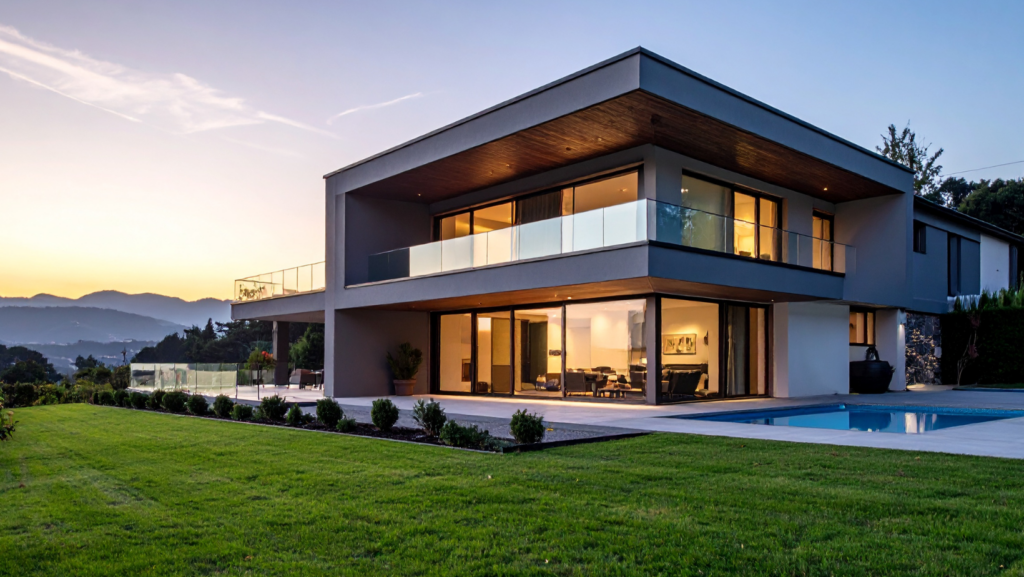
Contemporary homes with green roofs benefit from cooler, more saturated palettes. Charcoal gray siding with a dark green roof creates a sophisticated, low-contrast look popular in modern farmhouse and Scandinavian-inspired designs. Pair with black or bronze metal accents, window frames, railings, light fixtures, for a cohesive feel.
Dark-on-dark schemes work when there’s ample natural light and large windows to break up the mass. Without enough glazing, the home can read as heavy and uninviting. Use lighter trim sparingly (white or light gray) around windows and entry doors to create visual breaks.
Blue-gray siding pairs well with cooler green roofs (forest, evergreen). The analogous relationship keeps the palette calm and unified. This works especially well on ranch-style homes and mid-century modern designs. Avoid warm beiges or tans as accents, they’ll clash.
Black exteriors are bold but effective with green roofs, especially on smaller structures like ADUs, cabins, or modern sheds. The green provides enough color interest to keep the home from disappearing into shadow. Use natural wood accents (cedar, ipe, or thermally modified wood) to soften the starkness.
Many design-forward publications feature black exteriors with living green roofs for urban infill projects, where the vegetation contrasts sharply with dark cladding.
Metal siding, standing seam or corrugated panels in matte black, charcoal, or weathered steel, complements green roofs on contemporary builds. Pair with large expanses of glass and minimalist landscaping for a clean, intentional look.
Regional and Architectural Considerations
Climate and weathering affect color longevity. In humid regions (Southeast, Pacific Northwest), darker greens and earth-tone siding resist visible mildew and algae better than pure whites. In arid climates (Southwest, High Desert), lighter colors reduce heat gain and keep interiors cooler, even with a green roof.
Architectural style sets boundaries. Colonial and Federal homes look best with traditional palettes, white, cream, or brick with green roofs. Craftsman and Bungalow styles suit warmer tones: taupe, olive, or brown siding with sage or moss green roofs. Midcentury modern homes can handle cooler, more saturated schemes, teal siding or blue-gray with forest green.
HOA and historic district rules may restrict color choices. Always check covenants before purchasing paint or scheduling siding work. Some jurisdictions require approval for exterior color changes, especially in designated historic areas.
Material-specific considerations matter. Fiber cement siding holds paint well and allows for bold color choices. Vinyl siding comes in limited colors and can’t be painted effectively, so choose carefully upfront. Wood siding (cedar, pine) can be stained or painted, but natural wood tones, especially cedar’s warm gray weathering, pair beautifully with green roofs without additional color.
For homes undergoing comprehensive renovations, consider how window trim, soffit, and fascia colors integrate with the overall palette. Seamless color flow between roofline and siding prevents a disjointed appearance.
Lighting and landscaping also influence perceived color. Homes shaded by mature trees may need lighter siding to avoid looking dark and closed-in. Full-sun exposures can handle deeper, richer tones. Foundation plantings in complementary colors, yellow coreopsis, red salvia, or white hydrangeas, tie the landscape into the home’s palette and enhance curb appeal year-round.