Table of Contents
ToggleNot every room in your home basks in bright, direct sunlight. Hallways, bathrooms, north-facing corners, and rooms with small windows often struggle with lighting, but that doesn’t mean they have to stay bare. Tall house plants that tolerate low light bring vertical drama, improve air quality, and turn forgotten corners into focal points. Whether you’re working with a basement apartment or just a dim entryway, choosing the right plants makes all the difference. This guide covers varieties that grow upward without demanding a greenhouse, how to keep them healthy, and where to position them for maximum impact.
Key Takeaways
- Tall house plants for low light create vertical interest and improve air quality while filling forgotten corners and making rooms feel larger without cluttering floor space.
- Dracaena and rubber plants are top low-light performers that reach 6–10 feet indoors with minimal fuss, tolerating fluorescent lighting and north-facing windows equally well.
- Overwatering is the leading cause of death for tall low-light plants—water only when the top 2–3 inches of soil dry out, and empty saucers within 30 minutes to prevent root rot.
- Use well-draining potting soil amended with perlite at a 3:1 ratio and feed sparingly with half-strength fertilizer every 8–12 weeks, since plants in low light grow slowly and need fewer nutrients.
- Position tall plants in corners, behind seating, or flanking furniture for design impact, ensuring they receive ambient daylight or bright artificial light for several hours daily—or supplement with full-spectrum LED grow lights.
Why Tall House Plants Are Perfect for Low-Light Rooms
Tall plants create vertical interest in spaces where floor-to-ceiling design matters. Unlike sprawling or tabletop varieties, they draw the eye upward, making rooms feel larger and more balanced. In low-light areas, defined as spaces receiving less than 100 foot-candles or roughly 10–25 feet from a window, plants evolved for forest understories perform best. These species naturally adapted to dappled or filtered light, which mimics the conditions under a canopy.
Another advantage: tall plants offer more foliage per square foot of floor space, meaning better air purifying benefits without cluttering surfaces. A six-foot Dracaena or rubber plant in a 12-inch pot takes up minimal footprint but delivers maximum green presence. They also anchor a room’s design. Placing a tall plant next to a sofa, bookshelf, or in an empty corner softens hard edges and fills vertical voids that smaller plants can’t address.
Low-light tolerance doesn’t mean no light. These plants still need ambient daylight or bright indirect exposure for several hours daily. A room lit only by artificial bulbs may require supplemental grow lights (full-spectrum LEDs work well) to prevent leggy growth or leaf drop. If your space gets natural light but stays dim most of the day, you’re in the sweet spot for these varieties.
Top Tall House Plants That Thrive in Low Light
Dracaena Varieties: Versatile and Low-Maintenance
Dracaena species are workhorses for dim interiors. Varieties like Dracaena marginata (dragon tree), Dracaena fragrans (corn plant), and Dracaena deremensis (‘Janet Craig’ or ‘Warneckii’) routinely reach 6 to 10 feet indoors with minimal fuss. They tolerate fluorescent office lighting and north-facing windows equally well.
These plants grow slowly, so you won’t need to repot annually. Expect 3 to 6 inches of new growth per year under average conditions. They prefer well-draining potting mix, standard houseplant soil amended with perlite at a 3:1 ratio works. Water when the top 2 to 3 inches of soil dry out: overwatering causes root rot faster than underwatering stresses the plant.
Dracaenas are sensitive to fluoride and chlorine in tap water, which causes brown leaf tips. If your municipal water is treated, let it sit out for 24 hours before watering or use filtered water. Trim browned tips with clean shears at an angle to maintain appearance. These plants also rank high on low-light houseplant lists for their resilience and architectural form.
Fiddle Leaf Fig and Rubber Plant: Statement Makers for Shade
The fiddle leaf fig (Ficus lyrata) earned its reputation in bright light, but it adapts to medium and low light if you manage expectations. Growth slows considerably, and you’ll need to rotate the plant weekly to prevent it from leaning toward the light source. Fiddles can reach 6 to 10 feet indoors, with broad, violin-shaped leaves that make a bold statement.
Water when the top 1 to 2 inches of soil feel dry. Fiddles dislike wet feet, use a pot with drainage holes and a saucer to catch runoff. Leaf drop is common when light levels shift suddenly or watering becomes inconsistent. Acclimate the plant gradually if moving it to a dimmer spot, and avoid cold drafts from AC vents or exterior doors.
The rubber plant (Ficus elastica) is more forgiving. It tolerates lower light better than its fiddle cousin and grows upright with glossy, oval leaves in shades of green, burgundy, or variegated cream. Rubber plants can top 8 feet but grow slowly in shade, expect 6 to 12 inches per year. Wipe leaves monthly with a damp cloth to remove dust, which blocks light absorption and reduces photosynthesis efficiency. Both Ficus varieties benefit from humidity levels above 40%: mist occasionally or place a pebble tray with water beneath the pot.
Caring for Your Tall Low-Light Plants
Watering: Low light means slower photosynthesis and reduced water uptake. Overwatering is the leading cause of death for these plants. Stick your finger 2 to 3 inches into the soil, if it’s dry at that depth, water thoroughly until it drains from the bottom. Empty saucers within 30 minutes to prevent root rot. In winter, cut watering frequency by roughly half as growth slows.
Soil and Drainage: Use a well-draining mix. Standard potting soil retains too much moisture for most tall low-light plants. Amend with perlite, coarse sand, or orchid bark at a 3:1 or 4:1 ratio (soil to amendment). Pots must have drainage holes, decorative cache pots work if you use a grow pot inside and remove standing water after watering.
Fertilizing: Feed sparingly. Plants in low light grow slowly and need fewer nutrients than those in bright spots. Apply a balanced, water-soluble fertilizer (10-10-10 or 20-20-20 diluted to half strength) once every 8 to 12 weeks during spring and summer. Skip fertilizer entirely from late fall through winter unless the plant shows active new growth.
Pruning and Cleaning: Remove dead or yellowing leaves at the base with clean pruning shears to prevent disease. Wipe leaves with a damp microfiber cloth monthly, dust blocks light and invites pests like spider mites. For plants taller than 6 feet, use a stepladder and work from top to bottom. Prune leggy growth in early spring by cutting just above a node (the bump where a leaf attaches) to encourage bushier form.
Pests: Low light doesn’t prevent pests, but it can slow infestations. Inspect undersides of leaves monthly for spider mites (fine webbing), scale (brown bumps), or mealybugs (white cottony clusters). Treat with insecticidal soap or neem oil, spraying thoroughly and repeating every 7 days for three weeks. Isolate affected plants to prevent spread. Taller plants like vining varieties can harbor pests in dense foliage, so inspect carefully.
Repotting: Repot when roots circle the pot’s interior or emerge from drainage holes, typically every 2 to 3 years for slow growers. Go up one pot size (2 inches larger in diameter). Spring is the best time, as plants enter active growth. Use fresh potting mix and water lightly for the first week after repotting to reduce transplant shock.
Styling Tips: Where to Place Tall Plants in Your Home
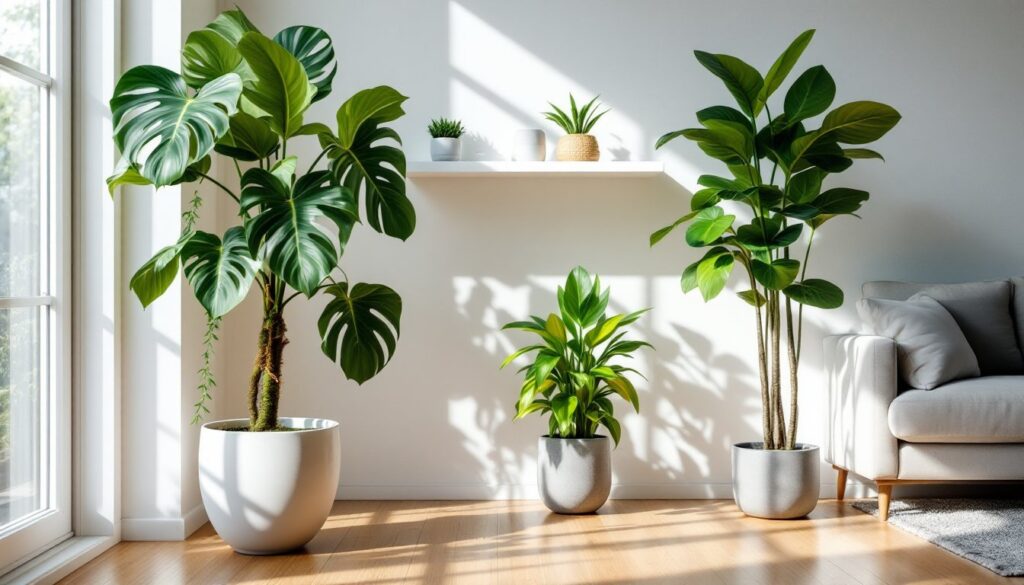
Corner Placement: Empty corners beg for vertical greenery. A tall Dracaena or rubber plant fills the space without blocking foot traffic. Use a floor stand or decorative pot that elevates the base slightly, this adds visual weight and makes watering easier. Corners near windows (even north-facing ones) provide ambient light while keeping plants out of harsh direct sun.
Flanking Furniture: Place matching tall plants on either side of a sofa, console table, or entryway bench for symmetry. This works especially well in modern or minimalist spaces where architectural lines dominate. Keep pots identical or coordinated in style and color for cohesion.
Bathroom and Hallway Drama: Bathrooms with frosted or small windows are prime low-light territory. Tall plants thrive in the humidity from showers and baths, just ensure the room gets some natural or bright artificial light. Hallways benefit from tall, narrow plants like Dracaena marginata, which grow upward without sprawling. If your hallway lacks windows, install a full-spectrum LED bulb in an overhead fixture or nearby lamp and run it 10 to 12 hours daily.
Behind Seating: Position a tall plant behind a reading chair or sectional sofa to create depth and layering. The plant should rise above the furniture’s back by at least 12 to 18 inches for visual balance. This setup works in living rooms, offices, or bedrooms where you want greenery without sacrificing floor space.
Grouping for Impact: Cluster plants of varying heights (tall, medium, and low) to mimic a natural grove. Use odd numbers, three or five plants, for a more organic look. Pair tall low-light plants with shorter cool houseplants or smaller species to create texture and contrast. Keep taller specimens toward the back or center of the grouping.
Practical Placement Notes: Avoid placing tall plants directly against heating vents, radiators, or AC units, temperature fluctuations stress them. Keep them at least 3 feet from drafty exterior doors in winter. If your space truly lacks light, consider high-quality grow lights rated for houseplants, full-spectrum LEDs mounted above or clipped to nearby shelves provide the 100 to 200 foot-candles these plants need.
For those who want greenery without the commitment, explore realistic faux options that mimic the look of tall plants in low light. While they won’t purify air or grow, they solve decorating dilemmas in windowless rooms.
Conclusion
Tall house plants designed for low light bring life to spaces other varieties can’t handle. They require patience, growth is slow, and care is deliberate, but the payoff is a room that feels finished and intentional. Stick to proven performers like Dracaena and rubber plants, respect their watering needs, and give them the ambient light they need to survive. With the right match between plant and placement, even the dimmest corner can become a green focal point.