Table of Contents
ToggleHouseplants are more than decorative accents, they’re functional additions that improve air quality, reduce stress, and bring life to dead corners. Whether you’re outfitting a sun-drenched living room or a dim bedroom, there’s a plant that’ll work. This list covers low-maintenance varieties for busy schedules, air-purifying picks backed by research, statement plants for filling vertical space, compact options for tight quarters, pet-safe choices, and species that thrive where sunlight’s scarce. No fluff, no Pinterest mood boards, just practical picks that’ll actually survive in your home.
Key Takeaways
- Low-maintenance houseplants like snake plants, pothos, and ZZ plants require minimal watering and tolerate neglect, making them ideal for busy homeowners who want a list of house plants that actually survive.
- NASA-backed research shows air-purifying houseplants such as spider plants and peace lilies remove VOCs like formaldehyde and benzene, though multiple plants per room are needed to match HEPA filter effectiveness.
- Statement plants like fiddle leaf figs and monstera deliciosa create visual impact in large spaces but require bright indirect light and careful watering to prevent overwatering damage.
- Pet-safe houseplant options including spider plants, Boston ferns, and African violets won’t cause serious harm if ingested, but always cross-reference the ASPCA database before bringing new plants home.
- Low-light tolerant plants such as cast iron plants, pothos, and ZZ plants can survive in rooms with north-facing windows or limited ambient light, though growth slows compared to brighter conditions.
- Most houseplant failures result from overwatering or improper light placement rather than lack of skill, so water only when soil indicates need and match plant light requirements to your space.
Low-Maintenance House Plants for Busy Homeowners
If you’re juggling work, kids, or just don’t want another thing to water every other day, these plants tolerate neglect better than most.
Snake Plant (Sansevieria trifasciata): Thrives on benign neglect. Water every 2–3 weeks, tolerates low to bright indirect light, and handles dry indoor air without complaint. The stiff, upright leaves won’t droop when you forget to water, they’ll just keep photosynthesizing. Place it in a corner with minimal light and it’ll still grow, albeit slowly.
Pothos (Epipremne aureum): Trailing vines that root easily in water if you want to propagate. Water when the top two inches of soil dry out, stick your finger in to check. It’ll tell you when it’s thirsty by wilting slightly, then bounce back within hours of watering. Grows in low to moderate light and handles occasional overwatering better than most.
ZZ Plant (Zamioculcas zamiifolia): Glossy, dark green leaves on thick stems that store water. You can water every 3–4 weeks in winter, slightly more in summer. It’s nearly impossible to kill unless you overwater consistently. Prefers indirect light but adapts to fluorescent office lighting.
Cast Iron Plant (Aspidistra elatior): Named for its durability. Tolerates temperature swings, inconsistent watering, and low light. It grows slowly, so don’t expect rapid vertical growth, but it won’t die if you go on vacation for two weeks.
Best House Plants for Improving Indoor Air Quality
NASA’s Clean Air Study identified several air-purifying houseplants that filter common volatile organic compounds (VOCs) like formaldehyde, benzene, and trichloroethylene. While you’d need several plants per room to match a mechanical HEPA filter, they do contribute measurably to cleaner indoor air.
Spider Plant (Chlorophytum comosum): Removes formaldehyde and xylene. Produces offsets (baby plants) on long stems that you can clip and replant. Water when soil’s dry to the touch, usually once a week. Prefers bright, indirect light but tolerates lower light levels.
Peace Lily (Spathiphyllum spp.): Filters ammonia, benzene, formaldehyde, and trichloroethylene. Blooms white flowers (technically modified leaves called spathes) when it gets enough light. Water when leaves droop slightly, it’s forgiving but dislikes sitting in water. Note: Toxic to cats and dogs if ingested.
Boston Fern (Nephrolepis exaltata): Acts as a natural humidifier while removing formaldehyde. Requires consistent moisture, check soil daily in dry climates. Prefers high humidity, so it thrives in bathrooms with windows or near a humidifier.
Rubber Plant (Ficus elastica): Broad, glossy leaves excel at filtering airborne toxins. Wipe leaves with a damp cloth monthly to maximize photosynthesis and air-cleaning capacity. Water when the top inch of soil dries out. Grows tall, up to 8 feet indoors, so give it vertical clearance.
Statement House Plants for Living Rooms and Large Spaces
When you need to fill a corner or anchor a room visually, these plants deliver scale and presence.
Fiddle Leaf Fig (Ficus lyrata): Large, violin-shaped leaves on a single trunk or branching form. Needs bright, indirect light, place within 5 feet of a south- or west-facing window. Rotate the pot a quarter-turn weekly to encourage even growth. Water when the top 2 inches of soil are dry: overwatering causes brown spots. Sensitive to drafts and temperature fluctuations below 60°F.
Monstera Deliciosa: Split, perforated leaves can span 2–3 feet on mature plants. Provide a moss pole or wooden stake for the aerial roots to climb, this encourages larger leaf fenestration. Water when soil’s mostly dry: yellowing leaves mean overwatering. Prefers bright, indirect light but tolerates medium light with slower growth.
Bird of Paradise (Strelitzia reginae or nicolai): Tall, paddle-shaped leaves that mimic tropical foliage. Strelitzia reginae (orange flower) stays under 6 feet: nicolai (white flower) can reach 10+ feet indoors. Requires bright, direct light for at least 4–6 hours daily if you want blooms. Water when the top inch of soil dries. Heavy feeders, use a balanced liquid fertilizer monthly during growing season.
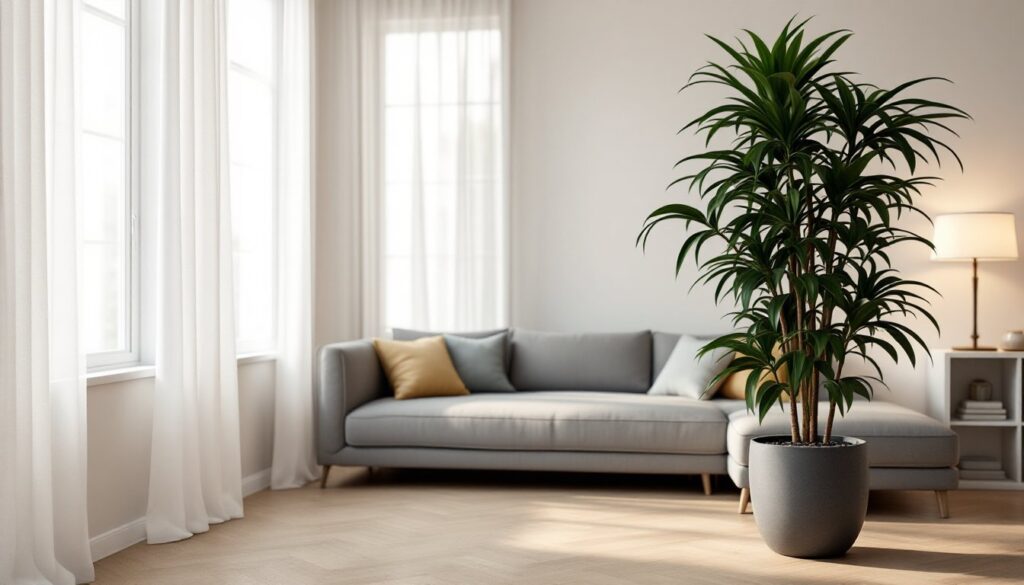
Dracaena marginata: Thin, arching leaves atop woody stems. Available in single-trunk or multi-trunk forms up to 6 feet tall. Tolerates low light but grows faster in bright, indirect light. Water every 1–2 weeks: sensitive to fluoride in tap water (use filtered or distilled if leaf tips brown).
Compact House Plants Perfect for Small Apartments
When floor space is limited, these plants fit on shelves, countertops, and narrow windowsills without sprawling.
Succulents (Echeveria, Haworthia, Sedum): Rosette-forming plants that rarely exceed 6 inches in diameter. Water only when soil’s completely dry, usually every 10–14 days. Require bright, direct light (south-facing window) or they’ll stretch (etiolate) toward the light source. Use a well-draining cactus mix: standard potting soil retains too much moisture.
Peperomia (various species): Compact foliage plants with thick, waxy leaves. Peperomia obtusifolia (baby rubber plant) and Peperomia caperata (ripple peperomia) stay under 12 inches tall. Water when soil’s dry, they’re semi-succulent and rot easily if overwatered. Prefer moderate, indirect light.
Air Plants (Tillandsia spp.): Epiphytes that don’t require soil. Soak in room-temperature water for 20–30 minutes weekly, then shake off excess and place upside-down to dry. Need bright, indirect light and good air circulation. Popular for vining plant displays when mounted on driftwood or in hanging glass globes.
String of Pearls (Senecio rowleyanus): Trailing succulent with bead-shaped leaves. Grows 2–3 feet long in a hanging basket or cascading off a shelf. Water sparingly, every 2–3 weeks, and provide bright, indirect light. Overwatering causes mushy, translucent leaves.
Pet-Friendly House Plants That Are Safe for Cats and Dogs
If you have pets that chew on plants, these non-toxic options won’t cause more than mild stomach upset if ingested. Still, it’s best to discourage chewing, most plants cause digestive irritation even if they’re not technically poisonous.
Spider Plant (Chlorophytum comosum): Safe for cats and dogs. Cats sometimes chew the long, arching leaves because they mimic grass. Hang it or place it on a high shelf to reduce temptation.
Boston Fern (Nephrolepis exaltata): Non-toxic and safe if nibbled. The delicate fronds may get damaged by curious pets, so elevate it if possible.
Parlor Palm (Chamaedorea elegans): A true palm that’s safe for pets. Grows slowly to 4 feet indoors. Prefers low to medium light and consistent moisture, don’t let the soil dry out completely. Naturally arching fronds add a tropical look without the toxicity of similar-looking plants like Sago Palm (which is extremely toxic).
Calathea (various species): Patterned foliage plants with non-toxic leaves. Calathea orbifolia, ornata, and medallion are popular varieties. They prefer high humidity and low to medium light. Water when the top inch of soil dries, and use distilled or filtered water to prevent leaf-edge browning from tap water minerals.
African Violet (Saintpaulia spp.): Small, flowering plants safe for pets. Prefer bright, indirect light and consistent moisture. Water from the bottom (place pot in a saucer of water for 10–15 minutes) to avoid spotting the fuzzy leaves.
Important: Cross-reference any new plant with the ASPCA’s toxic and non-toxic plant database before bringing it home. Some commonly sold plants, like pothos, philodendron, and peace lily, are toxic to pets even though being low-maintenance for humans. If your pet has a habit of chewing houseplants, stick to verified pet-safe species.
House Plants That Thrive in Low Light Conditions
“Low light” doesn’t mean no light. Most plants need at least ambient light from a window, even if it’s north-facing or shaded by a building. If you can read a book comfortably without artificial light, the plant can probably survive.
Pothos (Epipremne aureum): Tolerates fluorescent office lighting and dim corners. Growth slows in low light, but it won’t die. Variegated varieties (like ‘Marble Queen’) may lose some patterning in very low light and revert to solid green.
Snake Plant (Sansevieria trifasciata): Adapts to low light by slowing growth. Won’t produce new leaves as quickly, but established plants stay healthy for years. Keep away from drafty windows in winter.
ZZ Plant (Zamioculcas zamiifolia): Stores water in rhizomes and thick stems, so it handles low light and infrequent watering. One of the most forgiving plants for windowless offices or interior bathrooms with overhead lighting.
Cast Iron Plant (Aspidistra elatior): Survives in near-darkness better than almost any other houseplant. Growth is glacially slow, but it won’t decline. Tolerates neglect, temperature swings, and low humidity.
Chinese Evergreen (Aglaonema spp.): Variegated foliage in silver, pink, or red. Prefers low to medium light and high humidity. Water when the top inch of soil dries. Varieties with more green tolerate lower light than heavily variegated types.
Philodendron (Heartleaf, Philodendron hederaceum): Trailing or climbing plant with heart-shaped leaves. Grows in low to bright indirect light. Water when soil’s mostly dry. Toxic to pets, so keep it out of reach.
If you’re unsure whether your space qualifies as low light, use a light meter app or a basic foot-candle meter. Best low-light varieties typically need 50–250 foot-candles, which is common in rooms with small or north-facing windows. For additional care guidance, extensive houseplant resources and country-inspired plant styling tips are available online.
Conclusion
Choosing the right houseplant comes down to matching the plant’s needs with your space and schedule. Start with one or two from the categories that fit your home, low-maintenance if you travel often, pet-safe if you have animals, low-light if your windows are limited. Water only when the soil tells you to, not on a rigid schedule, and find reliable sources for healthy starter plants. Most failures come from overwatering or placing a plant in the wrong light conditions, not from lack of a green thumb.