Table of Contents
ToggleLarge indoor plants do more than fill empty corners, they anchor a room, soften hard architectural lines, and bring dramatic scale to any space. A six-foot fiddle leaf fig or a sprawling monstera commands attention the way a piece of art does, but with the added benefit of cleaner air and a living, evolving presence. Whether someone’s working with a sun-drenched loft or a dim apartment corner, statement greenery can redefine a home’s entire character. This guide covers the best big indoor house plants, how to keep them thriving, and where to place them for maximum impact.
Key Takeaways
- Large indoor house plants serve as living architecture, anchoring rooms, improving air quality, and creating dramatic focal points that can replace multiple smaller pieces of décor.
- Top varieties like fiddle leaf figs, monsteras, bird of paradise, and rubber plants thrive in bright, indirect light with well-draining soil and consistent but not excessive watering—check soil moisture 3–4 inches deep rather than relying on visual cues alone.
- Proper placement matters: position big indoor house plants away from heating vents, rotate them every two weeks for even growth, and use location strategically to anchor furniture arrangements and reduce screen glare.
- Repot every 18–24 months in a pot only one size larger, use a well-draining mix with 20–30% perlite, and avoid overwatering, which causes root rot—the most common reason large plants fail indoors.
- Monthly leaf maintenance with a damp cloth improves photosynthesis and prevents pest infestations, while feeding with half-strength balanced fertilizer every 4–6 weeks during growing season supports healthy, vigorous growth.
Why Choose Large Indoor Plants for Your Home?
Big plants solve real design problems. They fill vertical space without requiring shelving or wall mounts, making them ideal for high ceilings or awkward alcoves. A single seven-foot palm or rubber tree can replace multiple small pots, reducing clutter and simplifying maintenance routines.
From a practical standpoint, larger leaf surface area means better air filtration. Studies referenced by Better Homes & Gardens show that plants like rubber trees and dracaenas can remove formaldehyde, benzene, and other VOCs more effectively than smaller specimens. This isn’t a substitute for proper ventilation, but it’s a measurable benefit.
Statement plants also mature more gracefully than smaller varieties. A young fiddle leaf fig might look scraggly at eighteen inches, but at five feet, it develops the branching structure and presence it’s known for. Buying big often means buying mature, which translates to fewer awkward growth phases and faster visual payoff.
Finally, large plants anchor furniture arrangements. Placing a bird of paradise behind a sofa or next to a reading chair creates a natural focal point, pulling the eye upward and making rooms feel taller. It’s the same principle as hanging art at the right height, scale matters.
Top Big Indoor House Plants for Dramatic Impact
Fiddle Leaf Fig and Monstera Deliciosa
Fiddle leaf figs (Ficus lyrata) are the standard-bearer for statement plants. Their broad, violin-shaped leaves can reach twelve inches across, and mature specimens easily hit six to eight feet indoors. They prefer bright, indirect light, ideally within six feet of an unobstructed east or west window. Direct afternoon sun scorches the leaves, but too little light causes leaf drop and leggy growth.
Watering is non-negotiable: let the top two inches of soil dry between waterings, then soak thoroughly until water drains from the pot. Fiddles are sensitive to both overwatering and inconsistent moisture. If the lower leaves yellow and drop, check drainage first. Ceramic or terracotta pots help regulate moisture better than plastic.
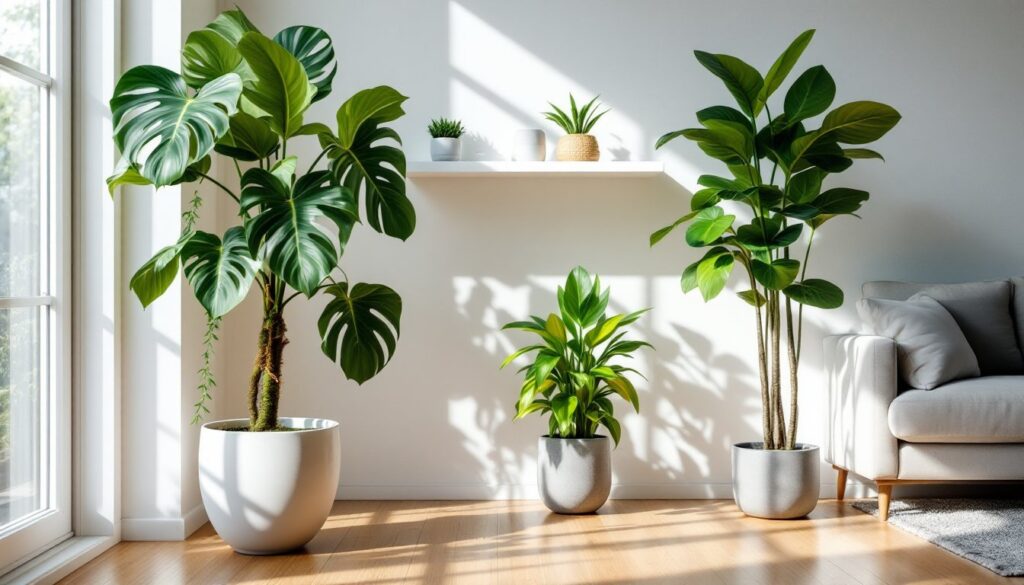
Monstera deliciosa, or Swiss cheese plant, grows faster and forgives more mistakes. It’s a vining aroid that climbs when given a moss pole or trellis, reaching eight to ten feet indoors. The iconic split leaves develop once the plant matures, younger monsteras produce solid, heart-shaped foliage. For faster fenestration, provide a support structure and keep the plant root-bound (slightly snug in its pot).
Monsteras tolerate medium light but grow more aggressively in bright, indirect conditions. They’re also trendy houseplant choices that adapt well to various interior styles. Water when the soil dries halfway down the pot, and wipe the leaves monthly to remove dust, which blocks light absorption.
Bird of Paradise and Rubber Plant
Bird of paradise (Strelitzia nicolai or Strelitzia reginae) brings tropical structure without the finicky care. The white variety (S. nicolai) can reach ten feet indoors, with paddle-shaped leaves that split naturally as they age, this is normal, not damage. It needs the brightest spot available: south-facing windows work best. Flowers are rare indoors unless the plant receives at least six hours of direct sun daily, but the foliage alone justifies the footprint.
Water deeply once the top three inches of soil dry out. In winter, reduce frequency but don’t let the root ball dry completely. Bird of paradise is heavy, expect a ten-gallon pot to weigh sixty-plus pounds when wet. Use a wheeled plant caddy for mobility, especially during seasonal rotations.
Rubber plants (Ficus elastica) offer glossy, burgundy or variegated leaves on a sturdy central trunk. They’re more compact than fiddles, typically five to seven feet indoors, and handle lower light better, though growth slows. Rubber plants are also recognized for their air-purifying qualities, removing airborne toxins efficiently.
They’re drought-tolerant once established. Let the soil dry almost completely between waterings, especially in fall and winter. Overwatering causes root rot, identifiable by mushy stems and leaf drop. Prune the top to encourage branching: the milky sap can irritate skin, so wear nitrile gloves when cutting.
Essential Care Tips for Large Indoor Plants
Potting and Soil: Use a well-draining mix, standard potting soil plus 20–30% perlite or orchid bark works for most large tropicals. Avoid garden soil: it compacts and suffocates roots indoors. Pots should have drainage holes. If using a decorative cachepot, empty the saucer after watering to prevent standing water.
Repot every 18–24 months or when roots circle the pot’s edge. Go up one pot size (two inches wider in diameter). Overpotting, jumping from a ten-inch to a sixteen-inch container, causes soil to stay wet too long, inviting rot.
Watering Technique: Water at the soil line, not the leaves. Use room-temperature water to avoid shocking roots. For large pots, water in stages: add a quart, wait five minutes for it to penetrate, then repeat until water drains. This prevents dry pockets and runoff.
Check moisture with a wooden dowel or moisture meter inserted three to four inches deep. Visual cues (drooping leaves, dry surface) aren’t always reliable with large containers, where the bottom stays wet while the top dries.
Light and Rotation: Most large tropicals need 200–400 foot-candles of indirect light. Measure with a light meter app (many are free) or use the shadow test: hold your hand twelve inches above the plant at midday. A soft, defined shadow means medium light: a sharp shadow indicates bright light: no shadow means low light.
Rotate plants 90 degrees every two weeks to ensure even growth. Without rotation, they’ll lean toward the light source, developing lopsided canopies.
Feeding and Maintenance: Feed with a balanced liquid fertilizer (10-10-10 or 20-20-20 NPK) diluted to half strength every four to six weeks during the growing season (spring through early fall). Skip fertilizer in winter when growth slows. Overfed plants develop brown leaf tips and salt buildup on the soil surface, flush with water if this occurs.
Dust large leaves with a damp microfiber cloth monthly. Dust blocks stomata, reducing photosynthesis and making plants more vulnerable to pests. For low-light varieties, clean foliage is even more critical since they’re already working with limited energy.
Pest Management: Spider mites and scale thrive on large indoor plants, especially in dry winter air. Inspect leaf undersides and stems weekly. Spider mites leave fine webbing: scale appears as brown, waxy bumps. Treat with insecticidal soap or neem oil, spraying until runoff. Repeat every seven days for three weeks to break the reproductive cycle. Isolate infested plants to prevent spread.
Best Room Placement Ideas for Statement Plants
Living Rooms: Anchor a seating area with a monstera or fiddle leaf fig positioned between a sofa and a window. This creates a layered look and softens the transition between furniture and architecture. For homes curated by interior design enthusiasts, large plants frame conversation areas without blocking sightlines.
Avoid placing plants directly over heating vents or radiators. Forced air dries foliage rapidly, causing browning and leaf drop. If vents can’t be avoided, use a deflector or position the plant at least three feet away.
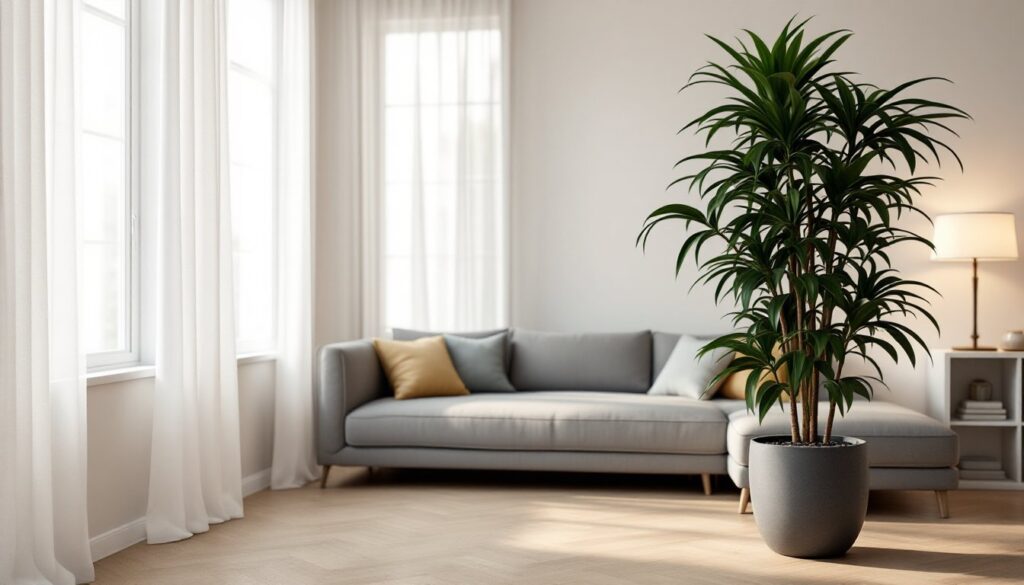
Entryways and Corners: A bird of paradise or dracaena fits narrow entryways where floor space is limited but ceiling height is generous. These upright growers don’t sprawl, making them ideal for high-traffic zones. Use a 16–18 inch diameter pot as a minimum to prevent tipping, large plants are top-heavy.
Dead corners behind doors or next to staircases are prime real estate for vertical greenery. If natural light is scarce, supplement with a full-spectrum LED grow light (2,000–3,000 lumens) placed two to three feet above the canopy. Many homeowners also explore options for where to source plants that suit specific lighting conditions.
Bedrooms and Offices: Rubber plants and snake plants (larger varieties like Sansevieria trifasciata ‘Laurentii’) work in bedrooms because they tolerate lower light and irregular watering. Position them at least three feet from the bed to avoid overwhelming the space visually.
In home offices, place a large plant perpendicular to the desk to reduce screen glare and create a natural privacy screen during video calls. This also improves air quality in smaller, enclosed spaces where VOCs from electronics and furniture accumulate.
Bathrooms (If Applicable): High-humidity rooms suit tropicals like palms or philodendrons, but only if there’s sufficient natural light. A skylight or large window is essential, most bathrooms lack the 200+ foot-candles these plants need. If light is inadequate, rotate plants in and out every few weeks rather than keeping one specimen permanently.
Conclusion
Statement plants aren’t just decor, they’re living architecture. Choosing the right species, understanding its care requirements, and placing it where it gets adequate light separates thriving specimens from struggling ones. Start with one proven performer, dial in the watering routine, and scale up from there. A well-placed fiddle leaf fig or monstera will outlast most furniture and grow more impressive every year.