Table of Contents
ToggleBig-leafed plants aren’t just decorative, they’re functional workhorses that fill empty corners, soften hard angles, and improve air quality without a major renovation. A single well-placed Monstera or Bird of Paradise can anchor a room faster than a gallery wall, and unlike fiddle-leaf figs that sulk at the slightest breeze, many large-leaf varieties tolerate typical household conditions. Whether working with bright indirect light or a dim hallway, there’s a statement plant that’ll thrive without a degree in horticulture. This guide covers 15 big-leaf varieties, their care requirements, and how to style them so they look intentional, not like someone knocked over a greenhouse.
Key Takeaways
- Indoor plants with big leaves create dramatic focal points that fill empty corners and soften hard angles while improving air quality in typical household spaces.
- Popular large-leaf varieties like Monstera, Bird of Paradise, Rubber Plants, and Philodendrons tolerate a range of light conditions from bright indirect to low light without demanding perfect growing conditions.
- Watering consistency matters more than frequency—use a moisture meter or finger test to water when soil is dry 2–3 inches deep, as overwatering is the leading cause of houseplant failure.
- Large-leaf plants thrive in 40–60% humidity and benefit from grouping with other plants or using pebble trays, while misting provides minimal benefit and can promote fungal issues.
- Dust leaves every 2–3 weeks with a damp cloth to maintain photosynthesis efficiency, and rotate plants 90 degrees bi-weekly to ensure balanced growth and prevent leaning toward windows.
- Start with low-maintenance varieties like Rubber Plants or Philodendrons, then progress to finicky species like Monstera or Fiddle-Leaf Fig as your care skills improve.
Why Big-Leafed Plants Are Perfect for Your Home
Large leaves deliver outsized impact per square foot of floor space. A single specimen with 12–18 inch leaves creates a focal point that smaller plants can’t match, even when clustered. They’re especially effective in modern or minimalist interiors where one dramatic element beats a dozen fussy accents.
From a practical standpoint, bigger leaves mean more surface area for photosynthesis, which often translates to faster growth and more efficient air filtration. NASA’s Clean Air Study (though limited in scope) identified several large-leaf tropicals as effective at removing formaldehyde and benzene, compounds common in pressed wood, upholstery, and household cleaners.
They also solve design problems. Need to soften a stark corner? Hide an ugly electrical panel? Fill vertical space in a room with high ceilings? Big-leafed plants handle all three without drilling a single hole. And because most hail from tropical understories, they’ve evolved to thrive in the low-to-medium light levels found in typical living rooms, no south-facing greenhouse required.
Be honest about your space, though. These aren’t windowsill plants. Mature specimens can span 3–5 feet wide and 5–8 feet tall. Measure the footprint before buying, and remember that air purifying house plants need adequate clearance from walls and furniture for air circulation around those big leaves.
Best Indoor Plants With Large Leaves for Every Space
Tropical Giants: Monstera and Bird of Paradise
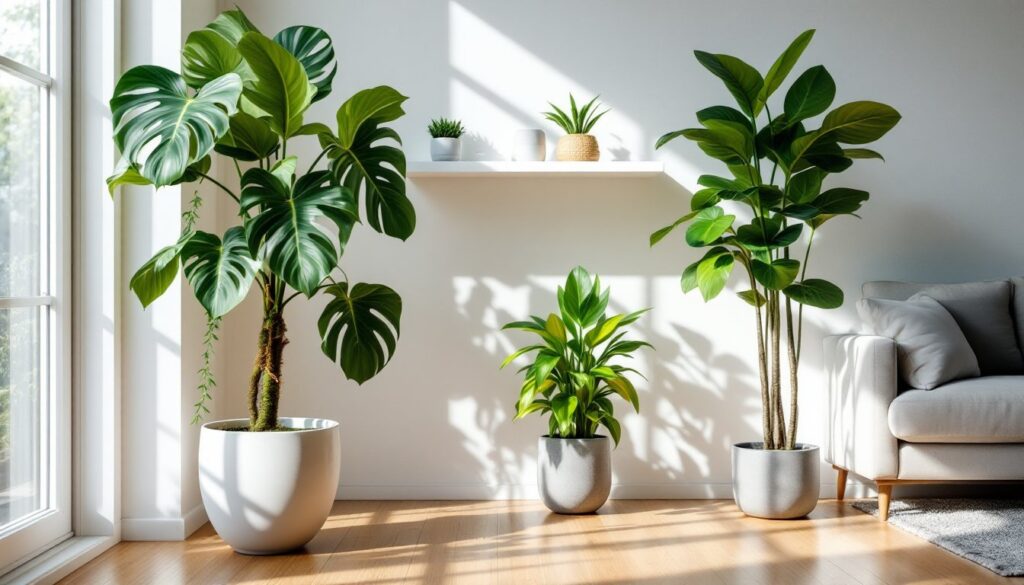
Monstera deliciosa (Swiss Cheese Plant) tops every list for good reason. Mature leaves reach 2–3 feet across with those signature splits (fenestrations) that develop once the plant is about 2–3 years old. It’s a vining aroid, so give it a moss pole or let it sprawl. Prefers bright indirect light but tolerates medium light, just expect slower growth and smaller fenestrations. Water when the top 2 inches of soil dry out, typically every 7–10 days in standard household temps.
Monstera adansonii (Swiss Cheese Vine) offers a more compact alternative with smaller, hole-punched leaves. Great for shelves or hanging baskets if you want the look without the footprint.
Strelitzia nicolai (White Bird of Paradise) delivers paddle-shaped leaves up to 18 inches wide and 6 feet long on mature plants. It’s a clumper, not a climber, and needs a pot with serious heft to stay upright, think 14-inch diameter minimum for a 5-foot specimen. Requires bright light (ideally near a south or west window) and consistent moisture during growing season. According to Country Living’s list of large-leaf houseplants, Birds of Paradise bring instant tropical drama but need space to spread those massive leaves.
Both Monstera and Strelitzia are toxic to pets and kids if ingested, calcium oxalate crystals cause oral irritation. Keep them out of reach or skip them if you’ve got nibblers.
Low-Maintenance Options: Rubber Plants and Philodendrons
Ficus elastica (Rubber Plant) is nearly indestructible once established. Leaves reach 8–12 inches long, with varieties in burgundy, variegated cream, or glossy dark green. Thrives in bright indirect light but adapts to medium light, just avoid moving it around, as Ficus species drop leaves when stressed by location changes. Water when the top 2–3 inches of soil dry out. Wipe leaves monthly with a damp cloth to remove dust and keep those stomata functioning.
Philodendron bipinnatifidum (Philodendron Selloum or Tree Philodendron) produces deeply lobed leaves up to 3 feet long. It’s self-heading (grows upward from a central point rather than vining), making it ideal for floor placement. Tolerates low light better than most large-leaf plants, though you’ll get more vigorous growth in brighter conditions. These pair well with cool house plants for a layered tropical look.
Philodendron gloriosum offers heart-shaped velvety leaves with white veining, stunning in low-light corners. It’s a crawler rather than a climber, so give it a wide, shallow pot.
Ficus lyrata (Fiddle-Leaf Fig) deserves mention even though its reputation. Yes, it’s fussy about watering (soggy roots = root rot: too dry = brown edges), but if you can provide bright indirect light and a consistent watering schedule (water when top 2 inches dry, then water thoroughly until it drains), the violin-shaped leaves are worth the effort. Not beginner-friendly, though.
Other solid performers include Alocasia (Elephant Ear), with shield-shaped leaves up to 2 feet long, and Calathea orbifolia, which offers rounded, striped leaves around 12 inches wide. Both prefer higher humidity (50%+), so run a humidifier or group them with other plants to create a microclimate.
Care Tips for Large-Leaf Indoor Plants
Watering: The bigger the leaf, the faster it transpires water, but that doesn’t mean daily drenching. Overwatering kills more houseplants than underwatering. Invest in a moisture meter ($10–15) or stick your finger 2–3 inches into the soil. Water thoroughly when it’s dry at that depth, then let excess drain completely. Most large-leaf tropicals hate wet feet.
Light Requirements: “Bright indirect light” means within 3–5 feet of an unobstructed east or west window, or 5–8 feet from a south window with sheer curtains. “Low light” is farther from windows but still enough to read a book comfortably during the day. No houseplant truly thrives in a windowless room without supplemental grow lights. If your plant isn’t growing or new leaves stay small, it needs more light.
Humidity: Most big-leaf tropicals prefer 40–60% humidity. Central heating and AC drop indoor humidity to 20–30% in winter. Signs of low humidity include brown leaf edges and curling. Solutions:
- Group plants together (they create their own humidity through transpiration)
- Run a humidifier during heating season
- Place pots on pebble trays filled with water (bottom of pot sits above water line)
Misting does almost nothing, it evaporates in minutes and can encourage fungal issues.
Soil and Drainage: Use a well-draining potting mix, standard houseplant mix works for most, but aroids (Monstera, Philodendron) benefit from adding 20–30% perlite or orchid bark to increase aeration. Pots must have drainage holes. Decorative cache pots are fine, but always empty standing water after 15–20 minutes.
Feeding: Feed every 4–6 weeks during active growth (spring through early fall) with a balanced liquid fertilizer diluted to half strength. These plants can be found alongside best house plants for low light in terms of care simplicity, they don’t need aggressive fertilization. Stop feeding in winter when growth slows.
Cleaning: Dust blocks stomata and reduces photosynthesis. Wipe leaves every 2–3 weeks with a damp microfiber cloth. Skip the commercial leaf-shine products, they’re unnecessary and can clog pores.
Pest Watch: Large leaves attract spider mites, especially in low humidity. Inspect undersides of leaves weekly for fine webbing or stippling. Treat early infestations with insecticidal soap or neem oil. Scale and mealybugs also target big-leaf plants, look for cotton-like clusters at leaf joints.
Repotting: Most big-leaf plants need repotting every 2–3 years or when roots circle the drainage holes. Go up one pot size (2 inches larger in diameter). Spring is ideal timing. Wear gloves when handling aroids, that sap irritates skin.
Styling Your Space With Statement Foliage
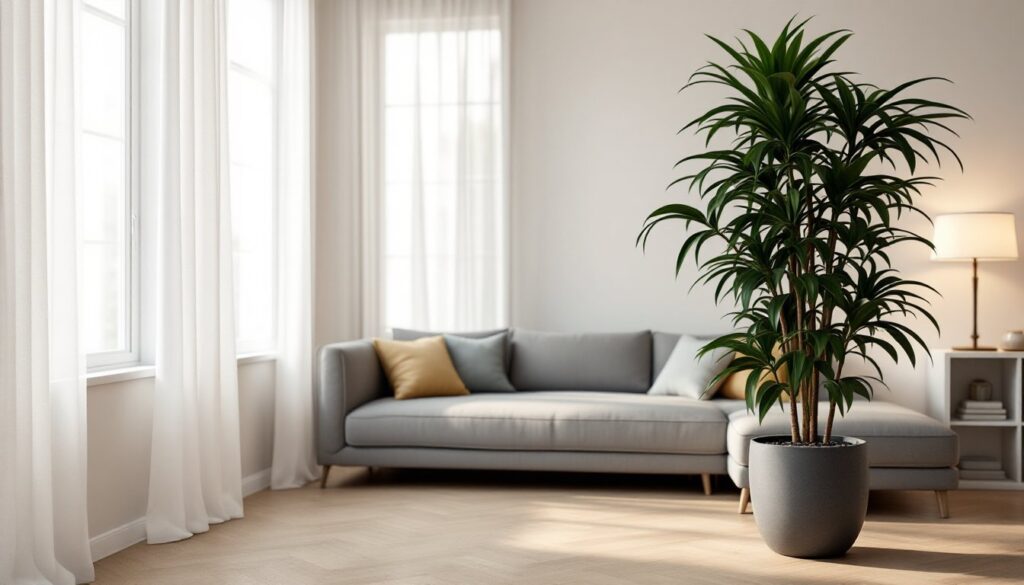
Floor Placement: This is the natural home for large specimens. Use a 10–16 inch floor planter (ceramic, concrete, or woven baskets with plastic liners) to anchor corners or flank entryways. Place taller plants (5+ feet) behind seating to create a backdrop without blocking sightlines. Gardenista’s guide to large-leaf plants demonstrates how even a single well-placed specimen transforms a room’s proportions.
Layering Heights: Combine one large floor plant with smaller varieties on plant stands or side tables to create depth. A 6-foot Bird of Paradise pairs well with trailing vining house plants on a nearby shelf, the contrast in leaf shape and growth habit makes both stand out.
Architectural Balance: In modern spaces with clean lines, let the plant be the organic counterpoint. In traditional or maximalist rooms, big leaves simplify visual clutter. Either way, give the plant breathing room, crowding it with furniture or decor dilutes the impact.
Container Selection: The pot matters. Neutral colors (white, black, concrete gray, terracotta) let foliage shine. Decorative cache pots add personality but shouldn’t compete visually. Ensure the diameter is proportional, a 5-foot plant in a 10-inch pot looks unstable because it is unstable. As a rule, pot diameter should be roughly 1/3 to 1/2 the plant’s height for visual balance. Resources like The Spruce offer extensive guides on container selection for various plant sizes.
Rotation: Rotate plants 90 degrees every 2–3 weeks so all sides get equal light exposure. Otherwise, they’ll lean toward the window and grow lopsided.
Seasonal Swaps: If you rotate your decor seasonally, large plants provide year-round structure. In winter, they’re living green when outdoor landscaping is dormant. In summer, they echo patio plantings and blur indoor-outdoor boundaries.
Don’t Overdo It: One or two large specimens per room is plenty. Three or more can make a space feel like a conservatory (great if that’s the goal, overwhelming if not).
Conclusion
Big-leaf plants earn their space by combining visual drama with practical function, air purification, humidity regulation, and architectural presence that no throw pillow can match. Start with a forgiving variety like Rubber Plant or Philodendron if you’re new to large specimens, then graduate to Monstera or Bird of Paradise as your confidence grows. The key is matching the plant’s needs to your actual conditions, not the conditions you wish you had. Bright light, consistent watering, and a bit of patience will turn a nursery specimen into a room-defining statement piece.